
Lead Story
Australian Turf Club seeks Supreme Court injunction after Racing NSW appoints administrator
By Trevor Marshallsea
@ANZ_News


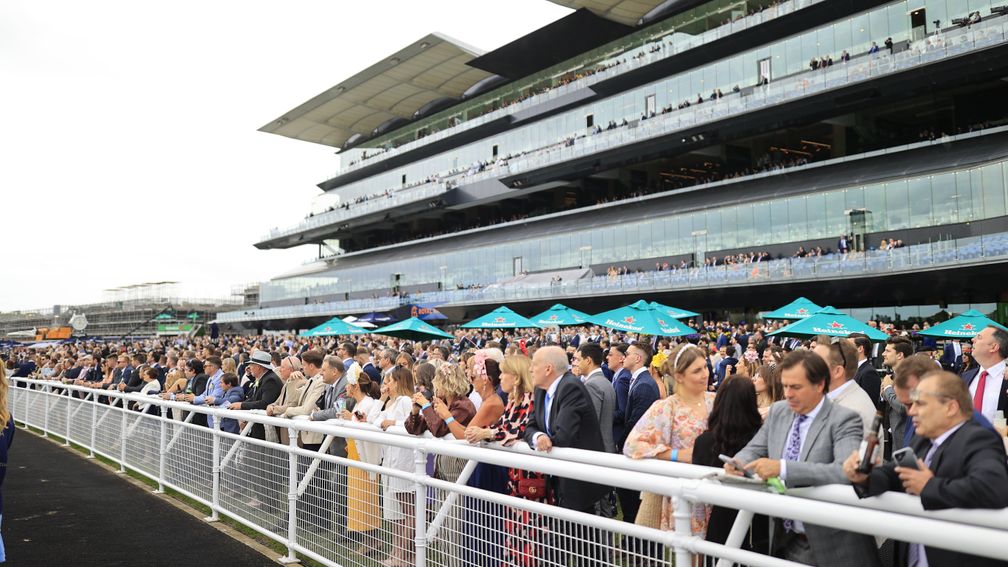
The Australian Turf Club (ATC) has launched Supreme Court action against Racing NSW’s (RNSW) move to appoint an administrator to take over the club’s affairs, claiming its board does not accept the regulator has the power to do so.
RNSW in September asked the ATC to show cause why the regulator should not appoint an administrator to run the club, owing to concerns over its financial situation. RNSW gave the ATC two weeks to lodge a formal response, which was later extended by three weeks until October 24.

What's On
ATC chairman Tim Hale SC said at the time the ATC would cooperate with that process, saying it would help its long-term viability while also adding, “I’d like to emphasise that the ATC remains asset-rich, resilient and strong”.
However, on Monday morning, RNSW issued a media release announcing the appointment of “an Administrator” to conduct the club’s affairs.
The regulator said this had followed an “extensive” and “exhaustive” show cause process undertaken “to ensure the ATC was afforded every reasonable, and indeed ample, opportunity to address the serious concerns raised”.
“Throughout the Show Cause process, the ATC Board was repeatedly invited to provide detailed submissions, present its proposed strategy to improve the Club’s financial performance, its future solvency and respond comprehensively to concerns regarding corporate governance,” the release read.
Advertisement
“Specifically, the ATC Board was unable to demonstrate it could develop and implement a strategy to improve the commercial performance of the club, or rectify the serious financial issues. Further, the corporate governance concerns had not been appropriately addressed.”
RNSW said it had “appointed a professional administrator who will report to a committee to be established. This committee will be constituted of the necessary expertise and may include a mix appointed from current ATC Board members, ATC members using a best practice skills matrix and other suitable persons”.
The administrator was not named in RNSW’s release. The Sydney Morning Herald later named the administrator as Morgan Kelly, of Ernst and Young.
RNSW said the committee and the administrator would replace the functions of the ATC board, while the day-to-day operations would continue to be managed by the ATC’s executive team and “there will be no impact on the conduct of race meetings or events at ATC venues”.
“This administration period will provide an opportunity for the ATC to improve its financial performance, address the serious financial issues and develop a robust and best practice long term strategy for the club, using the best possible skills and expertise,” the release concluded.
Hours later, the ATC board responded by saying it believed RNSW did not have the authority to take its announced step.
“The ATC Board does not accept that Racing NSW has the legal power to remove or displace the duly appointed directors of the Club, or to install an administrator in their place,” the board said in a statement.
“The Board remains in office and continues to regard itself as the lawful governing body of the ATC under the ATC Constitution, the (Commonwealth) Corporations Act 2001, and the Australian Jockey and Sydney Turf Clubs Merger Act 2010 (NSW).”
That statement was soon followed by ATC directors filing for an emergency injunction in the Supreme Court late on Monday, a club spokesman told ANZ.
The Sydney Morning Herald reported Scott Robertson SC, appearing for the ATC’s four board members, told the court the appointment of an administrator by the regulator had been made for an “improper purpose” and was “invalid”.
Oliver Jones SC, representing RNSW, countered by saying the controlling body had the statutory authority to take such action and had “grave concerns as to the Australian Turf Club’s ability to manage itself”, the Herald reported.
The paper added the case would be heard on Tuesday, after RNSW agreed not to take any further steps until then.
In its media statement, the ATC board asserted it had met RNSW’s demands through the show cause process.
“Throughout the show cause process, the ATC has engaged constructively and in good faith. The Club has provided detailed written submissions, extensive financial and strategic material, and independent expert advice addressing the issues raised by Racing NSW,” the board’s statement said.
“The Board rejects any suggestion that it has failed to develop or present a coherent strategy to improve the Club’s commercial performance or to address governance concerns and does not accept the characterisation of its response in Racing NSW’s statement.”
It added: “Given the position now taken by Racing NSW, the ATC has no choice but to seek urgent relief from the Supreme Court of New South Wales.
“The Club will ask the Court to determine whether Racing NSW has any power to appoint an administrator to conduct the affairs of the ATC in place of its Board, and to examine the way in which this decision has been reached, including questions of predetermination and independence.
“Pending the Court’s determination, the ATC Board will continue to act in what it considers to be the best interests of the Club, its members and the broader racing industry.”
The board said day-to-day racing and events at ATC venues would “continue as scheduled, and the Club’s focus remains on delivering safe, successful race meetings and high-quality experiences for participants, members and customers”.
It added the ATC would not make further detailed public comment at this time, “as this matter will shortly be before the Court”.
Monday’s news was the latest development in a dramatic year for the ATC.
In late May, club members voted down the proposal to sell Rosehill racecourse for an estimated $5 billion for housing development. Chairman Peter McGauran resigned six weeks later.
In September, the club sacked its chief executive Matt Galanos. Four days later, Ben Bayot and Natalie Hewson resigned from the club’s board. The following day, RNSW served the ATC with its show cause notice.
Bayot and Hewson’s departures leave four directors on the ATC board - Hale, vice-chair Caroline Searcy, plus directors David McGrath and Annette English. Steve McMahon is interim CEO.
In its annual report for 2024-25, the ATC announced a loss of $2.59 million, up from $2.42m in the previous year. Those losses were an improvement on those of 2021-22 ($7m) and 2022-23 ($9.9m).
Hale wrote in a note to members the 2024-25 loss was affected by “two significant one-off items”.
“Last year’s result included a $1.9 million accounting benefit from the write back of a provision for [Randwick’s] QEII grandstand cladding works,” he wrote.
“This year’s result was impacted by approximately $2 million in costs related to the proposed sale of Rosehill Gardens, which had to be explored fully to determine the merits of a potentially huge revenue uplift versus the risks.
“After adjusting for these non-recurring items, the underlying operating result is marginally stronger than the previous year. This reinforces that the club’s core businesses are performing well.”
Hale said cash flow had improved significantly, up $8.6 million to $22.9 million, net assets were $300 million and “debt has been managed prudently”.
The ATC’s annual report showed it has a loan of $30 million repayable to the Commonwealth Bank by October 10, 2026. It also owes RNSW $145 million – but that is in the form of a non-interest accruing loan which is only repayable if the club sells a major asset.
In the 2024-25 annual report, Hale also alluded to the club making a potential gain from some of the club’s lands, including at Canterbury racecourse and the Camellia precinct at Rosehill.
“It is important to note the solid and secure financial result of the ATC in 2024/25,” he wrote.
“The ATC remains asset rich and full of opportunities to further futureproof our long-term plans.
“Central to this will be to look at the potential of land holdings around the Camellia Precinct and Canterbury Park.”
The ATC would not be the first club placed into administration by RNSW, though it would be by far the largest. The regulator has previously taken the step against Wyong and Queanbeyan race clubs in 2014, and Hawkesbury and Tamworth in 2021.