

Australian Turf Club-Racing NSW court case adjourned until Friday
Racing NSW (RNSW) is “a regulator that’s lost its way” and has misunderstood its role in moving to appoint an administrator to the Australian Turf Club (ATC), a lawyer for the club has argued.
The assertion came from Scott Robertson SC on the first substantive day of a NSW Supreme Court hearing into RNSW’s attempt to have an administrator run the ATC’s affairs.
RNSW announced the move on Monday citing concerns over the club’s finances and the competency of its board.
The ATC is seeking an injunction blocking the move, arguing RNSW does not have the power to order the club into administration.
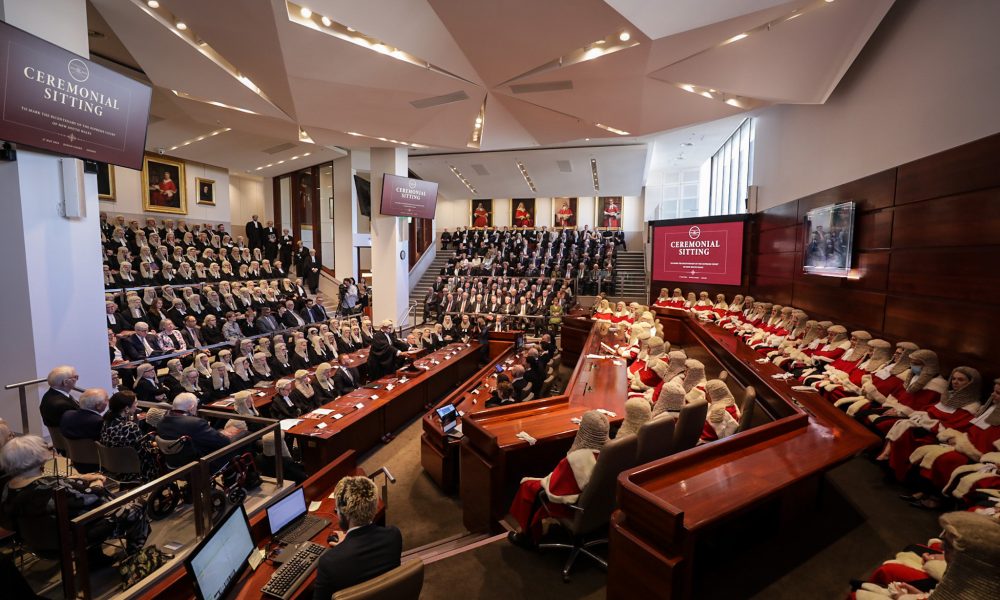
An interlocutory hearing began on Monday, freezing the process, and got underway in earnest on Thursday before Justice Francois Kunc – just 50 metres from the birthplace of the sport in this racing-mad country, Sydney’s Hyde Park, which hosted Australia’s first race meeting in 1810. Much of the day was taken up by legal argument, including in regard to matters of confidentiality.
Justice Kunc ultimately held proceedings over until Friday, where he is expected to determine whether the matter will go to a full trial most likely in February, or whether the ATC’s application is dismissed and the administrator begins his work.
As both sides proffered arguments on Thursday, Robertson put the ATC’s case that RNSW was acting outside its charter by appointing an administrator.
He told Justice Kunc the step had come amid a breakdown in relations between RNSW and the ATC which seemed to have started as “a disagreement” between Racing NSW and ATC members over the proposed sale of Rosehill racecourse. That proposal was defeated by ATC members in May.
“We say this is a regulator that’s lost its way in that it’s failed to understand the scope of its functions,” Robertson told the court.
“It is principally a regulator, and this regulator has taken it upon itself to act as a supervisor of commercial decisions for our client … which goes beyond its scope.”
Arguing the appointment of an administrator by RNSW had been made for an “improper purpose”, Robertson later added: “The purpose for which this power is purportedly exercised is foreign and beyond the powers conferred on this particular regulator.
“There is a fundamental misunderstanding on the part of this regulator as to the power and scope of its functions.
“The regulator is seeking to take [control] away from duly elected controllers.”
Oliver Jones SC, for RNSW, countered that the Thoroughbred Racing Act mandated the regulator “must act in the public interest and the interest of the horse racing industry as a whole in New South Wales”.
He said Racing NSW was a regulator unlike others “in the sense that its statutory functions include not just a requirement to enforce the law or regulate what people are doing, but in fact to further the commercial aspects of the horse racing industry” for its “betterment and welfare”.
Jones said RNSW was also worried about its own financial exposure as guarantor on a $30 million loan the ATC is scheduled to repay the Commonwealth Bank by next October 10, claiming refinancing negotiations had not been satisfactorily advanced.
He also said the matter of administration “goes to how Racing NSW’s money is deployed”, noting the ATC drew 77 per cent of its revenue from RNSW.
Robertson countered that this was “misleading in several respects”, since the ATC’s funding from RNSW was a matter of contractual entitlements.
“It’s not right to say that’s the regulator’s money being showered on the club,” Robertson said.
“It’s money earned at my client’s events and my client’s racecourses.”
Jones contended that under the Australian Rules of Racing, “when Racing NSW stewards enter the track, they are in control of the racing”.
Robertson conceded stewards were in charge of regulatory matters at racetracks, but said they were akin to umpires at a professional cricket match.
“The umpires decide when the covers come on and off,” he said, “but it’s still an event at the venue.
“It’s not right to say this money is a matter of largesse from the regulator. It is money received pursuant to contractual entitlements.”
Robertson noted Jones had made a “complaint” that there were only four directors left on the ATC board after the resignations of Ben Bayot and Natalie Hewson – the day before RNSW hit the club with a notice to show cause why it should not be put into administration.
“It’s his client [RNSW] that says a new director shouldn’t be put in place,” Robertson said. “This regulator has prevented my client from appointing further directors.”
In an update to members of Tuesday, ATC chairman Tim Hale wrote: “The Board sought Racing NSW’s approval to appoint an interim Member elected director to fill a current vacancy, ensuring strong Member representation during this period. That approval has not been granted.”
Much of Thursday’s hearing comprised arguments over whether the case could be held over until mid-February, with Justice Kunc also offering dates in late January.
Asked by Justice Kunc if there was any urgency to have the case decided before February, Jones – who occupied most of Thursday’s time for opening arguments – said the club had “financial obligations occurring … that may push it into insolvency.”
Jones said the matter was urgent enough to require resolution this week, with an administrator starting work, because of the club’s losses. He said that “over six weeks, we’re talking about an extra one million dollars that’s going to be lost by the club”.
He said the ATC’s annual capital expenditure budget of $5 million was “grossly inadequate”, and meant the club would be exposed to safety risks due to sub-par maintenance work at its four racecourses, the longer the wait continued for an administrator to begin work on the club’s finances.
Jones said another reason the move should be allowed was that the nominated administrator – Morgan Kelly, of Ernst and Young – had vast experience in hospitality, the area where the ATC derived the remaining 23 per cent of its revenue.
The matter will continue on Friday morning.