

‘We’re very hands on’ – rugby league royalty Billy Slater turning his talents to racing and breeding
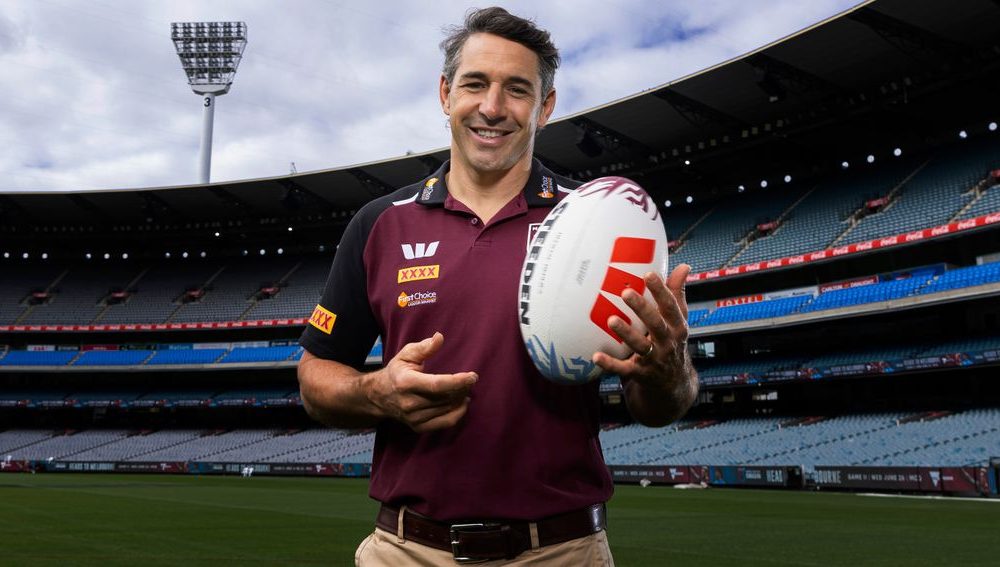
In the pantheon of modern sporting greats, rugby league icon Billy Slater sits front and centre.
His lengthy list of team and individual honours includes, to name but a few, two National Rugby League (NRL) premierships with the Melbourne Storm; a brace of World Cup triumphs with Australia; eight State of Origin successes with Queensland, who he has gone on to coach to three series wins; a Golden Boot Award, and a Daly M Medal for Player of The Year.
He was duly inducted into the NRL Hall of Fame in 2024.
Interestingly, the man many consider to be the game’s greatest ever fullback credits a spell working for iconic trainer Gai Waterhouse as having a profound impact on his rugby league career.
“I left school at 16 then went to work for Gai for six months,” he says. “It was seven days a week, I lived and breathed it. I loved it, and it actually taught me a great work ethic that helped me when I went on to play rugby league professionally.”
He also reveals that he toyed with the idea of going down the racing route before rugby league took over.
“I loved the track work but I was always going to be a bit too big and heavy to be a jockey,” he says. “Training was probably an ambition at certain points, but once I set my mind to giving rugby league a real shot, I was all in on that.”
Slater’s game was founded on a blend of speed, skill and strength. Although he never made it into the weighing room in a professional capacity, his post-playing career has featured an increasing amount of time in the saddle, showing that his soft hands and natural athleticism remain very much intact.
He is a key part of Channel Nine’s headline racing coverage, conducting heat-of-the-moment interviews while on horseback with winning riders like Jamie Melham after she landed last year’s Melbourne Cup (Gr 1, 3200m).
Slater has also utilised his horsemanship in his role as a Magic Millions ambassador. This link up has seen him ride in the iconic beach gallop on the Gold Coast as well as taking part in a celebrity polo match backed by the auction house. He was on the winning side during this year’s renewal of the latter event alongside royal family member Zara Tindall.
He and his wife, equine artist Nicole, also run their own racing and breeding operation, Slater Thoroughbreds. The couple’s three-strong broodmare band is based just outside Melbourne, where the 42-year-old remains as hands-on as he was during his teenage spell with the Waterhouse stable.
“Obviously while you’re playing rugby league professionally it’s a bit hard to dive into [having horses] because if you want to be good at something, you’ve got to be all in – and I certainly was with my footy,” he says. “But probably halfway through my career I started thinking about how can I do both, and not necessarily the racing industry, just how can I have horses and still do what I’m doing.
“Then, towards the end of my career I started getting into the breeding industry; it started small with one mare when we didn’t even have a property. Now we live on a small property outside Melbourne where we have a few broodmares, yearlings and foals. We love educating them, and I even break in a couple that we race. We’re very hands on. It’s an exciting process, and you just don’t know, they could go on and be champions of the turf.”
The Slater Thoroughbred paddocks are home to youngsters by the likes of Maurice (Screen Hero), Shamus Award (Snitzel), Street Boss (Street Cry) and Arrowfield’s up-and-comer The Autumn Sun (Redoute’s Choice).
The Street Boss colt is out of Chilli Filly (Vancouver), a Magic Millions purchase who carried Slater’s silks to victory on the track before joining the broodmare band. He hopes current colour bearer Cooly (Cool Aza Beel), a Caulfield maiden winner trained by Peter Moody and Katherine Coleman, will follow a similar route once her racing days are behind her.
As the head coach of the Queensland State of Origin side, Slater is well used to appraising the respective strengths of the competition’s elite names. Breeders undertake a similar process when it comes to selecting stallions during the annual round of mating plans, and Slater says he particularly enjoys this part of the thoroughbred breeding process.
“You’d be naive not to get advice from people but I love making the decisions off the back of that,” he says, speaking during the Gold Coast Yearling Sale. “And, at the end of the day, they’re your decisions. That’s pretty cool, and that’s what makes it special, to put in the time and make those decisions.
“It’s not an overnight thing, these horses here [at the sale] have been 12 months in decision making over matings, then they get born and there’s another 15 months for them to get here. It’s a long journey.”
He also suggests that picking the Queensland squad is “much easier” than unearthing a future champion at the yearling sales.
“The Queensland team is much easier because you can really see the habits of the athletes, but here you can only try to predict the habits of the horses,” he says. “You’re only looking at the pedigrees and the physical, so you do get a lot more information when you’re looking at rugby league players.”
Although the two sports’ participants may require vastly different physical attributes, Slater says he can see a clear crossover between racing and rugby league.
“I definitely see parallels in the training methods and the elite professionalism of both sports,” he says. “Racehorses are trained to the minute, they’re finely tuned, and that’s what we see with elite sportspeople across the board. There are definitely parallels there.”
While preparation may be key, either on the racetrack or on the rugby league field, Slater says he is drawn to the part fate and fortune has to play in the thoroughbred game.
“The one thing I love about the horses is that the person with $400 million can compete with the person with $10,000 in their pocket,” he says. “There’s still that element of luck. We’re here at the Magic Millions yearling sales and there are lots going for $2 million, but there are also lots going for $40,000, and they can still compete because there’s that element of luck.”
Reflecting on where his affinity with horses stems from, Slater says: “My connection with horses started before I’d even become a professional athlete; I’ve always had a great love for the horse.
“It probably comes from my grandfather. I grew up in the country, I certainly wasn’t a city boy, but we lived in town. My grandfather had horses and was an old stockman, so I’d go out to his property and we’d ride every now and again.
“Then my father was good mates with a couple of racehorse trainers, so he’d go there in the afternoon and I’d tag along. I ended up getting a job there walking horses, doing the boxes and that sort of stuff. From there, I got given an ex-racehorse as a pony and I started doing pony club and showjumping on her when I was about 14 years old. I actually met my wife at pony club, although we got together a little bit later in life.”
He may have long since etched his name into the rugby league history books, but his equine endeavours have helped write a whole new chapter in the Billy Slater story.
“A lot of things that I would’ve never imagined have happened in my life,” he says. “But you know what, you go out there and you set your sights and your goals high, and you never know what you can achieve. A boy from the bush, here I am standing at the Magic Millions!”
Having achieved almost everything there is to achieve in rugby league, what are Slater’s thoroughbred ambitions?
“Breeding a Group 1 winner would be very special because it doesn’t happen overnight, there’s a lot that goes into breeding a champion,” he says. “We’ve bred city winners, we haven’t quite got a black-type winner yet, so taking the stepping stones to breeding a champion would be something special coming from a small little farm.”