

Inglis makes pitch to breeders as entries open for its 2024 sales
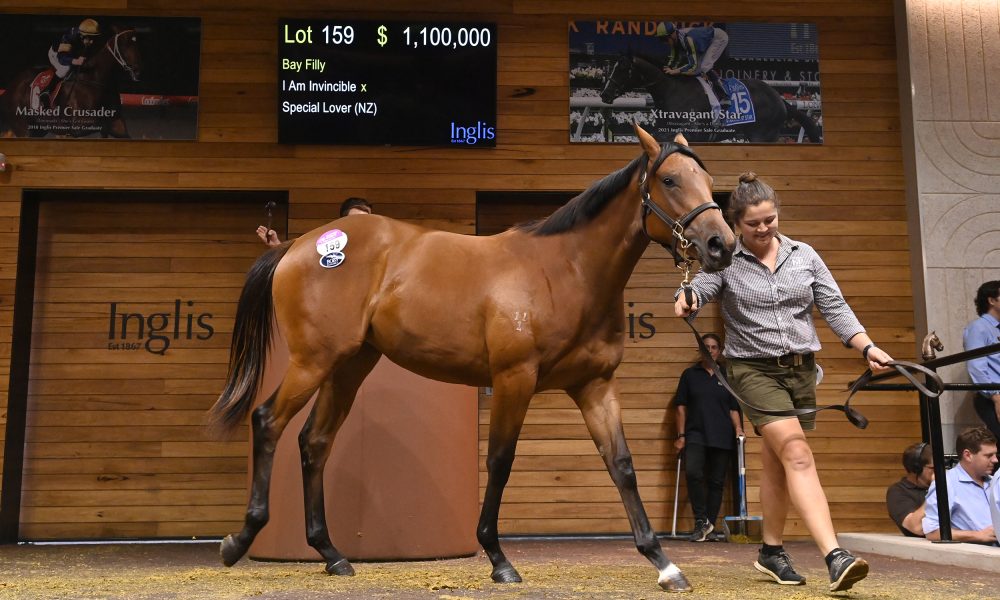
‘We feel like we deliver lucrative markets to people,’ says auction house’s Bloodstock chief executive Sebastian Hutch
Inglis has officially called for entries for its 2024 yearling sale series, publicly pitching to Australasia’s breeders to be given the chance to sell a portion or all of their foal crop at a live auction in Sydney or Melbourne next year.
After the recently completed sales season, the auction house is about to start its inspection process across Australia and New Zealand, courting vendors and undertaking their scoring processes of the 2022-born crop.
In his bid to lure breeders into consigning their yearlings with Inglis, the company’s Bloodstock chief executive Sebastian Hutch said: “we firmly believe we have a sales solution or a sale option for any vendor with any profile of horse”.
Hutch told ANZ Bloodstock News yesterday: “I think the 2023 sales series has demonstrated, and over the last number of years in particular, that we work hard to try and get the best results we can for as many people as we possibly can right across the board, from the most expensive horses at Easter to the value horses in the bottom quartile of any of our sales.
“It is something I would say we’re proud of, the fact we feel like we deliver lucrative markets to people and it is something we are focused on going into the future.”
Last week, New Zealand Bloodstock also called for entries for its 2024 Karaka National Yearling Sale while Magic Millions will also soon be taking official nominations for its series, headed by the season-opening January offering on the Gold Coast.
Graduate success is a big selling point in attracting buyers, a fact which is not lost on Hutch.
“The objectives of the two major participants in any sale are juxtaposed. Vendors want to try and get as much money as they possibly can for their horses, or achieve the best results they can, noting the nature of their investment, while buyers are trying to find the best horses for the least amount of money they possibly can,” he said.
“We want to try and get the best results we can, primarily to the vendors, but at the same time we want a situation where buyers are walking away from our sales, or reflecting on our sales, recognising the fact we’re giving them the opportunity to buy good horses.
“We’ve been lucky that the [Inglis] sales have consistently produced good horses for an extended period of time and hopefully that will continue to be the case.”
Sales companies can be the fall guys for a bad sales result or for having denied a young horse a place in a particular select sale, the decisions often made early in the spring at a crucial point of a yearling’s development.
Therefore, Hutch said, collaboration between breeders and sales companies is a vital part of the selection process.
“There are so many factors in play in identifying the appropriate sale placement for a particular horse, whether it’s pedigree – specifically the stallion and the female family – date of birth, profile of the farm, where does that horse sit in the context of a farm’s draft as a whole, where does that horse sit relative to others by that stallion,” he said.
“There are a number of factors and you don’t have to go to a ‘big sale’ to get a good result if you’re appropriately placed in one of the smaller sales.
“There are specific examples in the case of (Melbourne) Gold and HTBA sales where horses had been to earlier sales and hadn’t met the reserve, but who then sold for [a price] in excess of what they could have sold for at those earlier sales.
“It is an inexact science, so we try to work with people to identify the appropriate spot. Vendors have tremendous knowledge of their own horses and we rely on that and their guidance, just as they rely on us to be able to give pointers to where their horses will sit, relative to the crop or other horses who are going to be in that sale.”
There is competition, too, between Inglis, Magic Millions as well as New Zealand Bloodstock to have the best-bred and most sought after stock go through their respective sales rings and that will no doubt be the case again ahead of the 2024 sales.
An aspect which intensifies this competition, is the fact the majority of thoroughbreds bred in Australasia are put to market, rather than retained to race.
“It is fantastic for buyers in that you can say with a fair degree of confidence that the market gets access to the majority of the best stock and it’s not necessarily the case in other jurisdictions around the world,” Hutch said.
“With a big foal crop across Australia and New Zealand, what it does is create significant competition for spots.
“Between the five traditional [live Inglis] yearling sales and the other markets that we offer, we can give people a good shot at generating a commercial return with the commercially bred stock they’ve produced.”
Inglis will open its season with the three-day Classic Yearling Sale in Sydney on February 11 to 13, which comes after the headline Magic Millions and Karaka sales,
The Melbourne Premier Yearling Sale is scheduled for March 3 to 5 while the Australian Easter Yearling Sale at Riverside Stables is slated for April 7 and 8.
“They are important sales and they’re important markets,” Hutch said of Inglis’s select yearling sales.
“They’re markets that are popular with buyers. The reality is, certainly in the case of each of those three sales, and Premier in particular, that were held in 2023, they were effectively facing the teeth of economic pressures.
“It was a more difficult year than years prior. Premier was conducted at a time when sentiment seemed to be particularly guarded and I think in retrospect the results that were delivered across the sales were really quite fantastic.
“It is going to be the second most lucrative year in the history of Australian bloodstock, so we delivered plenty of money to the market and I think vendors will be pleased we worked hard to try and deliver them good outcomes across the board and that’s what we’ll be looking to do in 2024.”
Inglis said it had 129 individually listed buyers who bought yearlings for $500,000 or more in 2023 while almost $48 million was spent at its sales by 115 international buyers.
“We really take great satisfaction in the ability we have to present significant buying benches across all our sales,” Hutch said.
“We are not prioritising one sale over another. We want to deliver good results to participants in each of the sales.”
Entries for the 2024 Inglis sales series will close on Friday, August 18.