

Members say NO to sale of Rosehill
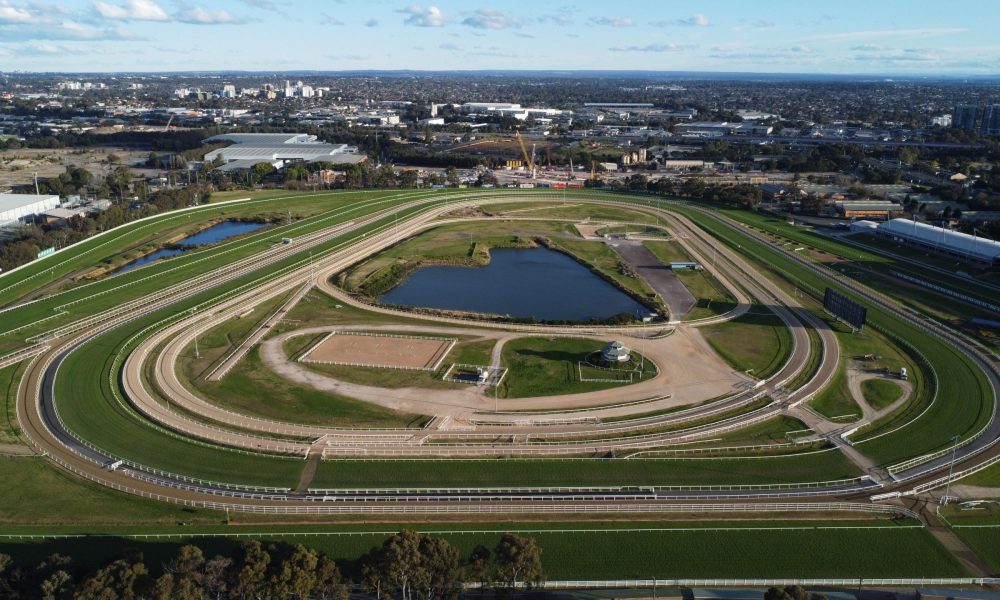
Australian Turf Club (ATC) chairman Peter McGauran indicated the heady days of massive prize-money in NSW racing could come under pressure after the club’s members killed off the proposed sale of Rosehill.
After some 600 members voted at an extraordinary general meeting at Randwick on Tuesday, following the returns of more than 7000 votes ahead of the meeting, members moved by a majority of 56 to 44 per cent to reject the plan.
With 7,864 of the club’s roughly 11,000 members voting, the margin – 4,413 votes to 3,451 – was more slender than many observers had anticipated for a plan widely slammed for its often ramshackle and on-the-hoof nature as it evolved in the 18 months since its shock announcement.
Some members polled by ANZ Bloodstock News as they left the meeting opined the ATC’s late carrot of a “loyalty bonus” for members if a yes vote was returned – encompassing five years of free membership and a $5000 drink and food tab over five years – had swayed many younger members to vote yes.
The verdict counts as a major defeat for Racing NSW CEO Peter V’Landys, who has loudly championed the proposal.
Attendees said the meeting had been often fiery as various members spoke. Rosehill’s largest tenant, trainer Chris Waller, attended but did not speak.
In a press conference following the meeting, McGauran confirmed the proposal was now “finished” and “will not proceed in any way, shape or form into the future”.
Opponents cheered the outcome. Gai Waterhouse said justice had prevailed with “a fantastic result” in the defeat of an “outrageous” proposal, likening it to a move to sell the Sydney Cricket Ground or Bondi Beach.
Save Rosehill campaign group spokesman Jason Abrahams voiced his “relief that it’s all over”.
Waterhouse and Abrahams said they looked forward to the coming state government review of the NSW Thoroughbred Racing Act. Critics of the act have called for change to improve and increase the distribution of wagering revenue more directly to clubs including the ATC, and away from Peter V’landys’ Racing NSW (RNSW).
McGauran, however, sounded warnings after the defeat of the plan, in which Rosehill was intended to be sold to the NSW government for $5 billion – pending the government’s final agreement – in order for the site to be transformed into a mini-city with 25,000 dwellings.
The “no” decision would, McGauran said, have serious consequences for Sydney racing, at a time when clubs around the world were feeling extreme pressure as racing’s social licence comes under more scrutiny than ever before.
“We’ll have to squeeze the lemon even drier, because we are dependent on wagering and wagering is turning down,” McGauran said.
“So, sadly, I think prize-money is brought into question, and our ability to provide the services members rightly demand, as well as encourage young people.”
McGauran was asked if he was concerned about the ATC’s financial future, given a Rosehill sale would have allowed it to pay back some $50 million it owes RNSW, and that that body’s revenue from wagering fell 5.7 per cent in the last financial year.
“We will have to have all the good judgment and wisdom to prosper as a raceclub into the future,” he replied. “But that is common not just for race clubs in New South Wales but across Australia and across the world. The ATC is far better placed than many others.
“What we have to do is go back to core business, seek to reduce our operating costs where we can, and discuss with Racing NSW and the state government how we can better align with their objectives and strategies.
“The funding [from selling Rosehill] would have transformed the entire Sydney racing scene for the next hundred years, as it would have funded with certainty the ATC non dependent on wagering income.
“I always saw it as both an opportunity and a necessity; an opportunity to completely change and modernise in the face of declining attendance and declining membership, as well as necessity – [regarding] wagering downturn.”
Welcoming the “no” vote, Abrahams said the Rosehill plan had been put together in a “haphazard manner”, with several “flaws and weaknesses” which left members unconfident about its merit.
The proposal had canvassed an idea to build a new racetrack at the Sydney Olympics site at Homebush, which was widely criticised as being ill thought-out, and quickly quashed.
The ATC then released plans for a comprehensive rebuild of Warwick Farm, on Sydney’s south-western fringe, before late in the day also canvassing a scheme to purchase a golf course at Penrith, around twice as far from the city centre, with the idea of building a track there.
“Everyone was willing to listen to what the board had to say,” Abrahams told ANZ Bloodstock News.
“But at the end of the day, a lack of detail in terms of how the process would happen, the lack of approvals for what they wanted to do, and then adding the Penrith option after the resolution was posted out to members – all of that illustrated to members there was definitely a lack of professionalism from the board in the way they went about the process.
“Had they done a better job, they might have got the result they were after, but I think all the members who are heavily invested probably saw through some of the clickbait headlines and we ended up getting the right decision.”
Abrahams said a review of NSW’s funding model was desperately needed.
“From day one we’ve said they need to review the Thoroughbred Racing Act,” he said.
“To say the club is in a crisis, there’s a lot of hyperbole involved in that.
“Wagering revenue for Racing NSW went up 50 percent from 2019 to 2023. To say that we have a wagering crisis and a revenue crisis for the industry is incorrect and the figures will tell you that.
“A five percent drop from 2023 to 2024 is not catastrophic, given that you’re still 45 percent above where you were in 2019.
“A review of the revenue streams for the industry in general, and who administers the revenues and how it’s distributed, is more important than looking at the smaller picture of the club itself.”
Abrahams said the ATC board ought to examine its own performance when assessing the recent decrease in attendances at Rosehill.
“It’s bad management or mismanagement on their behalf,” he said. “Their solution was to move everyone to Warwick Farm. If you thought Rosehill attendances weren’t good enough, I don’t know how you were going to get higher attendances out at Warwick Farm.
“All the advertising from the ATC has been around Randwick, the majority of it for Everest day. To then turn around and say attendances have been down at the Rosehill, when you give it no love, is hardly an issue. I think you should be looking at your management before you start calling out crisis terms.”
While McGauran highlighted that Rosehill’s attendances had halved in 10 years, little has been made in the entire Rosehill debate over the fact attendances have been plummeting at racetracks everywhere.
Waterhouse voiced delight over the death of the plan, saying it was “nice to see justice prevailing”.
“The Rosehill proposal was outrageous. Could you imagine selling the Sydney Cricket Ground, or Bondi beach?” the training legend told ANZ Bloodstock News from France, adding a complete overhaul was needed of how racing was run in NSW.
“The ATC owe Racing NSW all this money, but the whole structure of racing in New South Wales is upside down. The clubs have no control over where the wagering dollar goes.
“Once upon a time, the STC and the AJC ran their clubs independently, and Racing NSW was merely like the secretary.
“I said it at the government’s Rosehill inquiry – things are not right in the state of Denmark, and they have to be looked at very closely. The government should be taking stock of how racing is run.”
McGauran, who said he did not intend to resign as chairman despite the often chaotic nature of the conduct of the proposal, said the windfall from the plan would have “future-proofed” the ATC for many decades, at a time when racing faced extreme pressure globally.
“I believe Australian racing is quickly becoming a niche sport, and this lost opportunity will further accelerate that decline,” he said.
He added: “The problem for horse racing throughout the world – and I speak to my counterparts throughout Europe, Asia and America – is that we’re living carnival to carnival. The big days – yes: the Everest, the Championships days in the autumn, the Melbourne Cup, they are packed out.
“But in between the major days, the grandstands are empty, and yet we have to continue to feed the beast – the trainers and owners and jockeys and farriers and vets who are racing every day.
“There is a need for a reality jolt by people in racing, and much of this debate was influenced by the racing establishment, who have made their fortunes from racing. Their intentions were good but I don’t believe they were seeing the overall picture.
“France Galop has just announced massive prizemoney decreases. In England they’re running for ribbons. Ireland is collapsing with a lack of prizemoney.
Racing in America, apart from the Kentucky Derby, the Saratoga Carnival, the Pegasus, are running to empty crowds with declining wagering turnover.
“This is an issue that all racing authorities and clubs need to address over the next five years, or the situation will be worse than it is now.”
McGauran voiced concern racing’s “social standing will be further diminished” amid the wider population by headlines saying ATC members had prioritised keeping one of Sydney’s four tracks over the need to create much needed housing in the city.
That aspect drew state premier Chris Minns to also lament the “no” vote on Tuesday. He also ruled out compulsorily acquiring Rosehill, promising to respect the outcome of the vote.
“Members have to understand – we’ve all got young nieces, nephews, daughters and sons who don’t want to have anything to do with racing,” McGauran said.
“There is a turning of the social tide about competitive animal sports, and racing is not excluded from that.
“So we have to be aware of what we can do in the community, and not just be seen as a gambling entity.
“We did have a vision for a complete reshaping and restructuring, not just the physical aspects and assets of the club, but also how we’re positioned in society. The things we could’ve done with the funding, if the government had agreed to it, to help many charities and social groups would have helped bring people to the races.
“So I am disappointed we will never have the funding to better cement ourselves in the mind of the wider community, who have a declining – and rapidly so – interest in racing.”
Smarting from a political blow, Minns said the outcome of the vote was “disappointing”.
“I’m not going to lie. I think this would have been a great opportunity for Sydney,” he said.
Minns said McGauran had been “steadfast” despite “a lot of personal abuse” from critics of the plan. He also described V’landys as a “doer”.
“He grabs initiatives and pursues them. That kind of can-do philosophy … is amazing to watch,” he said. “Sydney could do with 10 Peter V’landys rather than one, and we’d be a more exciting, dynamic city as a result.”