

MP Parton goes into bat for capital’s racing industry
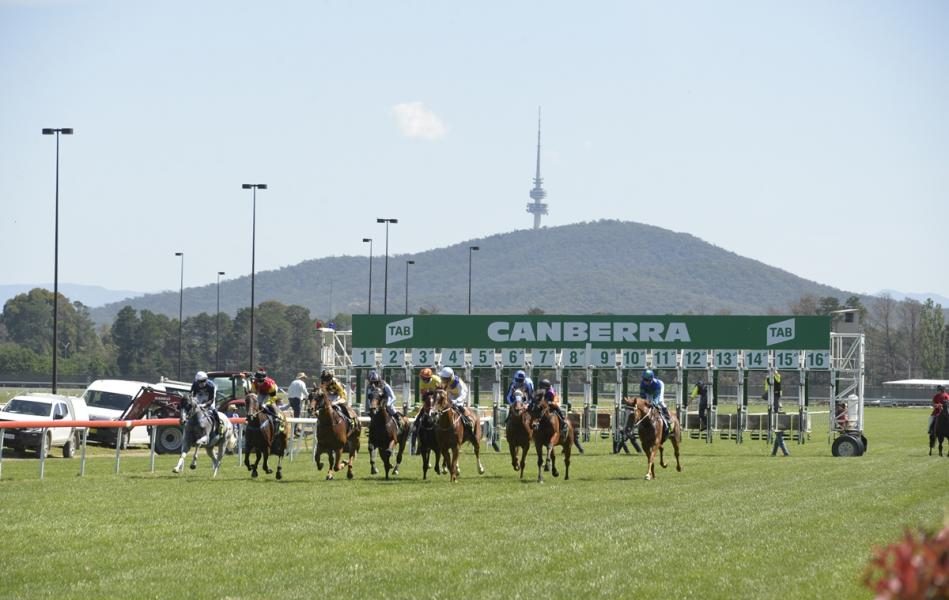
Funding assured but politician campaigning to shore up Canberra’s thoroughbred industry
Canberra may be the capital of Australia, but its thoroughbred racing industry is in danger of becoming a national backwater, if not wiped out all together, as the ACT’s Greens Party pushes for the withdrawal of government funding for the sport.
The ACT government recommitted to another five-year agreement, signing a Memorandum of Understanding with the Canberra Racing Club to ensure racing continues at Thoroughbred Park after the previous deal expired on June 30.
The MoU, worth $40 million over the span of the deal, also supports the Canberra Harness Racing Club through until June 2027. Greyhound racing in the ACT was banned by the government in 2018.
Mark Parton, the Liberal member in the ACT Legislative Assembly for Brindabella, is a former racecaller, racehorse owner and radio broadcaster who entered politics in 2016.
He has taken up the fight for the local racing industry – home of the two-year-old autumn feature race Black Opal Stakes (Gr 3, 1200m) – campaigning on behalf of the sport from parliament to ensure it is future-proofed after the expiry of new MoU.
“Look, [racing in Canberra has] got some serious challenges, but most of those challenges are based on the political landscape here,” Parton told ANZ Bloodstock News.
“In every other jurisdiction in Australia, sure, the Greens have a presence, but they can operate as an extremist fringe party, but here in the ACT they have a seat at the power-sharing table, a genuine seat. They have three Cabinet members in Parliament here.
“It means that those extremist ideas actually have a genuine impact, which is a major concern, because it has resulted in the banning of greyhound racing in the ACT and, although the Greens make it clear that they don’t wish to ban thoroughbred or harness racing, it is abundantly clear that they wish to end both thoroughbred and harness racing in the ACT and that doesn’t sound like Australia to me.”
The Greens had been campaigning for the axing of government funding of the local industry.
“There’s a much better way to use that public funding,” ACT Greens spokesperson for animal welfare Jo Clay told the media in June.
“It hasn’t gone through a public procurement, it hasn’t gone through a grant process.
“We have so many major problems at the moment; we are dealing with climate change, Covid and homelessness, and I don’t think it’s the right use of $40 million of public money.”
Last week, the ACT government also reportedly increased its Point of Consumption tax rate imposed on corporate bookmakers to 20 per cent, the same rate the Queensland Labor government will introduce later this year.
Parton says the economic impact of racing in the ACT was vastly more than what the government provides to the industry, paying the taxpayers back “in spades”.
“Here in the ACT, we sold ACT TAB in 2014 in a deal which saw the buyer, Tabcorp, sign up to a yearly licence fee of $1 million indexed to CPI, so that’s still ongoing,” the MP said.
“At the time, the Labor-Greens government scoffed at suggestions that the sale would one day mean they’d withdraw financial support to the racing codes. They promised steadfastly that the support would continue.
“Additionally, the great difference in the ACT is that in every other jurisdiction that there’s a percentage of Point Of Consumption gaming tax that goes back to the racing codes. In a couple of those states, it is as high as 80 per cent. Here, it is zip, zero, nothing.
“That’s just led to a very uneven playing field and it puts enormous pressure on both harness racing and thoroughbred racing in the ACT.”
During the lobbying process and prior to the Territory government’s decision to increase the rate of PoC tax, Canberra Racing Club’s acting chief executive Matthew Kolek said the industry generated significant returns through wagering.
“We expect, according to the ACT government’s budget estimates, that it’s between $17 (million) and $20 million a year over the next three or four years… and the bulk of that funding would be coming from the racing industry,” Kolek said last month.
“So, we’re responsible for generating $55 million in value-added economic contribution to the territory each year, and we’re also responsible for sustaining over 400 full-time jobs.”
The racing industry in Canberra has been fighting for its survival, Territory’s trainers hamstrung by obscene insurance premiums and a lack of certainty from the government.
Trainers Luke Pepper (Scone), Joe Ible (Kembla Grange) and Doug Gorrel (Wagga) have all relocated their respective stables to NSW from Canberra in the past 12 months.
Parton acknowledged the insurance impost on trainers – and all ACT businesses – was “a massive problem”.
He said: “It is going to require a complex solution. I am an optimist and I believe that we can win government in 2024 and that, from government after that time, we can work towards finding some sort of solution to even the playing field because financially it makes it very difficult to run an operation in the ACT.”
Prize-money for Canberra thoroughbred race meetings are funded by the club and not by Racing NSW, but competition for Australia’s biggest racing state means the club needs to keep pace with rising prize-money levels to encourage owners and trainers to enter their horses for Canberra race meetings.
“Canberra’s a great place to live and, aside from some of these other aspects and they are major aspects, it’s a pretty cool place to train racehorses,” he said.
“I am dismayed at the damage that the Greens have already done to the industry by what they’ve said with their narrative, but I see no reason why in the future, once we shore up the support of this industry, why we can’t attract more people here because it’s a wonderful place to train racehorses.”
ANZ Bloodstock News has previously reported on the woes of thoroughbred racing in Canberra, with some industry figures floating the idea of selling the valuable land where the racecourse is located to rebuild on a greenfield site on the NSW side of the ACT border, allowing “Canberra racing” to fall under the auspices of Racing NSW.
Parton, however, would not be drawn on whether it was a plausible way forward for Territory racing.
“I think I would leave discussion and decisions of that nature to people who are at the forefront of that race club because that is a pretty big call and it involves decisions that would have to be made and agreed to in NSW. I am just focusing on the world as it is now and how we can preserve a situation,” he said.
“I grew up in the country; I grew up around horse racing, horse racing is part of the fabric of Australia and I would be absolutely dismayed if the Australian Capital Territory became the only jurisdiction in the country that didn’t have that component of Australia in it.
“It would be disastrous to who we are… and I will do whatever I can to stop that from happening.”