
Racing mourns death of Queen Elizabeth II, aged 96
Industry remembers the longest-serving monarch and passionate thoroughbred supporter
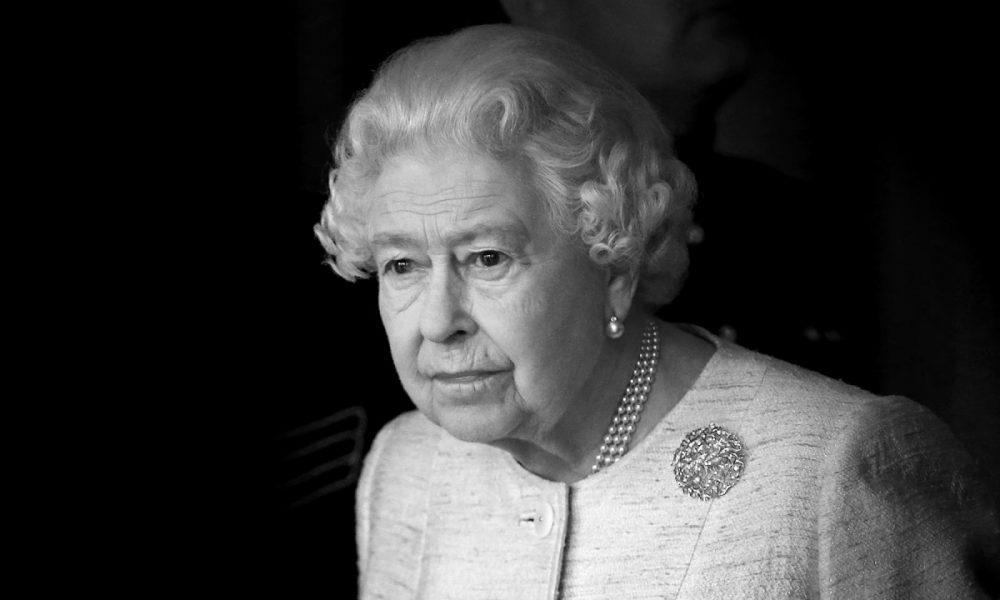
Queen Elizabeth II, the United Kingdom’s longest-reigning monarch and the world’s most recognised, respected and revered supporter of horseracing, died on Thursday afternoon aged 96.
Her Majesty will be mourned across all parts of the globe, not least by those who have shared her love of racing, the sport for which she was a figurehead throughout an extraordinary reign.
The announcement of the Queen’s death came in a statement posted by Buckingham Palace at 6.30pm (BST) Thursday evening. It said: “The Queen died peacefully at Balmoral this afternoon.
“The King and The Queen Consort will remain at Balmoral this evening and will return to London tomorrow.”
The royal family issued a statement on behalf of the Queen’s eldest son and heir, now King Charles III.
He said: “The death of my beloved mother, Her Majesty the Queen, is a moment of the greatest sadness for me and all members of my family.
“We mourn profoundly the passing of a cherished sovereign and a much-loved mother.
“I know her loss will be deeply felt throughout the country, the Realms and the Commonwealth and by countless people around the world.
“During this period of mourning and change, my family and I will be comforted and sustained by our knowledge of the respect and deep affection in which the Queen was so widely held.”
The Queen was twice Britain’s champion Flat owner, yet although those titles were claimed in 1954 and 1957, she continued to enjoy considerable success over the following decades, perhaps most famously when in the summer of 2013 Estimate (Monsun) carried her iconic silks to Gold Cup (Gr 1, 2m 4f) glory at Royal Ascot, the fixture more associated with her than any other.
The Queen has left an indelible legacy in horseracing across the globe, including in Australia, a country which she visited 16 times during her reign.
After acceding to the throne following the death of her father King George VI in February 1952, the Queen announced she would continue to race and breed the royal string of horses, with which she had been fascinated since childhood.
Racing became known as her primary interest, so much so that in all but exceptional circumstances she annually attended the Derby (Gr 1, 1m 4f) at Epsom and then every day of Royal Ascot, which has traditionally begun with a royal procession, in which the Queen travelled up the racecourse in the opening carriage. She was this year unable to attend either Epsom or Ascot due to mobility issues.
Monaveen (Landscape Hill), owned jointly with her mother, became the Queen’s first winning racehorse when she was still Princess Elizabeth in 1949.
Thereafter her horses won four of the five British Classics. Carrozza (Dante) lifted the 1957 Oaks (1m 4f) under Lester Piggott, Pall Mall (Palestine) took the 1958 2,000 Guineas (1m) and in 1974 Highclere (Queen’s Hussar) captured the 1,000 Guineas (Gr 1, 1m) before completing a Classic double in the Prix de Diane (Gr 1, 2100m) at Chantilly, with Her Majesty in attendance
Dunfermline (Royal Palace), arguably the Queen’s greatest horse, completed a Classic brace of her own when landing both the Oaks and St Leger (Gr 1, 1m 6.5f) in her owner-breeder’s 1977 silver jubilee year.
Aureole (Hyperion) came closest to giving the Queen a Derby triumph when finishing second in 1953, one year before his victory in the race named after her parents, the King George VI and Queen Elizabeth Stakes (1m 4f). More recently, Carlton House (Street Cry), who would end his career in Australia, came home a close third for the Queen in the 2011 Derby.
The Queen consented for her own name to adorn some of the world’s most prestigious races. Chief among them is the Queen Elizabeth II Stakes (Gr 1, 1m), the European mile championship event now staged on British Champions Day at Ascot, while the highlight of the autumn racing carnival in Australia is named the Queen Elizabeth Stakes (Gr 1, 2000m), staged at Royal Randwick in Sydney.
The Queen was a winning owner for the final time on Tuesday – the same day she officially appointed Liz Truss to become the 15th UK prime minister of her reign – when the Clive Cox-trained Love Affairs (Showcasing) landed a Goodwood nursery.
Her last runner came desperately close to winning, with the royal homebred Improvise (Iffraaj) losing by a short head when caught in the final stride by Mount Kosciuszko (National Defense) in Epsom’s concluding race on Thursday.
Paying his tribute, Estimate’s trainer Sir Michael Stoute said: “It was an honour, and also a great pleasure, to train for the Queen because she had such a formidable knowledge of the horse.”
Another of the Queen’s trainers, John Gosden, said: “She was a truly remarkable and extraordinary monarch whose love for her people defined her life. Her passion and profound knowledge of horses was unequalled and her advice was always acutely insightful.
“We are uniquely fortunate that Her Majesty was so involved and fascinated by the thoroughbred racehorse from the day her father took her to meet Sun Chariot at Beckhampton during the war.”
The Queen, at 27 years of age, first visited Australia in 1954, a year after an initial visit to New Zealand during which she visited Cambridge Stud, a venue she would again grace with her presence in 1990 when on an official visit to New Zealand.
She has marked occasions pertinent to racing in Australia throughout her reign, including when opening the Paddock Stand at Randwick, and allowing the use of the ‘Royal’ prefix to the racecourse’s name.
In 1997, the Queen’s horse Arabian Story (Sharrood) finished sixth in the Melbourne Cup (Gr 1, 3200m) behind Might And Power (Zabeel), while her best horse to race in Australia was Carlton House, who was trained by Gai Waterhouse in the latter stages of his career.
The entire, who would go on to have a forlorn stud career at Darley in New South Wales, never won in Australia, but finished second in the Ranvet Stakes (Gr 1, 2000m) and third in the Queen Elizabeth Stakes behind Dundeel (High Chaparral) in 2014.
He is living out his days in retirement at Woodlands Stud.
“She had a wonderful understanding of everyone,” Waterhouse told Racing.com. “That’s what made her such a lovely, great person. She could relate to everyone.
“She was very approachable and had a deep and great love of horses and she also loved racing folk.
“I spoke to her several times on the phone. The palace would ring you and then they would put you through. Wherever her horses were racing, she was always talking to her trainers and jockeys.
“It was a great privilege to train for her. I had two horses, but the one that was most memorable was Carlton House.
“He came from Sir Michael Stoute and he had a few little tags on him – he was a barrier rogue – and I had to ask permission from Her Majesty’s racing manager to ask Her Majesty if we could have Monty Roberts come over and work with him.”
In a visit to Australia in 1977, the Queen travelled to Lindsay Park, where she visited the record-breaking stallion Without Fear (Refuse To Bend). At the time, a young David Hayes was there to greet the Queen at the stud and training centre run by his father, Colin.
It would be 39 years later that David, alongside son Ben and nephew Tom Dabernig, would train the Queen’s first winner in Australia, when Bold Sniper (New Approach) won at Sandown on May 28, 2016.
“I clearly remember one day he [Bold Sniper] ran a terrible race and I thought it would run really well and said to Her Majesty later that the only thing I would change with the horse would be to take the pacifiers off,” Hayes told Racing.com.
“And she asked what the pacifiers were for and I meant to say they were to settle him down, but I said they were to slow him down. She replied: ‘Well, that certainly worked’.”
Racing today in Australia will pay tribute to the life of the Queen. The VRC will mark the event at Flemington, where she visited in 1953, 1963 and 1977.
“The VRC has joined the rest of the world in mourning the loss of Her Majesty who was a much-loved and respected leader and a life-long supporter of horseracing,” VRC chairman Neil Wilson said.
“On behalf of the VRC, I extend our deepest condolences to His Majesty The King and the entire Royal Family. The Queen had visited Flemington racecourse as part of three Royal Tours to Melbourne and her knowledge and passion of horseracing was well-known and inspiring.
“The Queen has left an extraordinary legacy and her contribution and support for our industry has always been greatly appreciated. She will remain in our hearts forever.”
Recently elected ATC chairman, Peter McGauran, said: “We join with people in racing and around the world in honouring and thanking Her Majesty for her unfailing service and remarkable life.
“The Australian Turf Club and in particular Royal Randwick is inextricably linked with Her Majesty Queen Elizabeth II and her love of the thoroughbred and racing.”
A minute’s silence will be observed at Rosehill, where jockeys will wear black armbands, and a floral display will be unveiled in the mounting yard.
A similar mark of respect will take place in New Zealand, a country Queen Elizabeth II visited on ten occasions, with a minute’s silence to be observed at both Ruakaka and Hastings, with jockeys to wear black armbands.
“It is only fitting that New Zealand Thoroughbred Racing commemorates Her Majesty’s love of racing given it is something we have all been able to share with her,” NZTR CEO Bruce Sharrock said.
“The Queen was the patron of the New Zealand Thoroughbred Breeders’ Association, opening their Ellerslie office during her 1990 visit to New Zealand. That interest in our breeding industry has also seen NZTR provide Her Majesty with a special edition of every printing of the New Zealand Stud Book throughout her reign.
“Footage of The Queen at race meetings always seemed to show her at her most relaxed, and she clearly enjoyed a day at the races.
“On Saturday we will remember her, not only as the monarch, but as one of the great participants of our sport.”