

The new reality
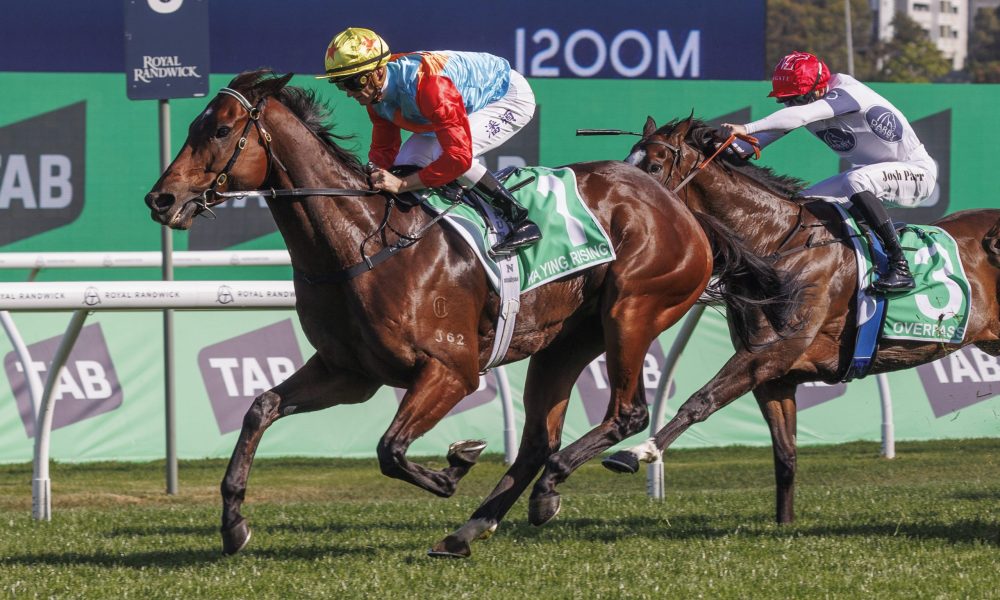
In less than ten years the Australian racing scene has been turned on its head.
For what seems like an eternity, spring racing in Melbourne has centred on the big three – the Caulfield Cup (Gr 1, 2400m), first run in 1879; the Cox Plate (Gr 1, 2040m), first run in 1922; and the Melbourne Cup (Gr 1, 3200m), first run in 1861.
All are run within a short period of three weeks, the Melbourne spring carnival considered the pinnacle of Australian racing. That is until now: Bold and brash, The Everest (Gr 1, 1200m), staged, audaciously, on the same day as the Caulfield Cup, is the new focus. We are witnessing an undeniable new reality.
In a history of just nine runnings, The Everest has taken over the mantle as Australia’s most popular race which has alternated between New South Wales’s Golden Slipper Stakes (Gr 1, 1200m) and Victoria’s Melbourne Cup in a well known inter-state rivalry.
The most recent edition of The Everest saw two firsts. Winner Ka Ying Rising (Shamexpress) is the first runner from Hong Kong as well as the first winner to be bred in New Zealand. The race’s history is in its infancy but the possibilities for the future are enticing, not to mention exciting.
If Hong Kong can be involved, why not Japan? Why not Europe? Why not the United States? The result of the 2025 running will not have escaped the connections of sprinters throughout the world. The mid-October date is not too late for northern hemisphere performers to make the journey. They could thumb a ride with the Melbourne Cup aspirants, or vice-versa.
Ah yes, the Melbourne Cup, the race which was so popular the state of Victoria chose to make the first Tuesday in November a public holiday, such was its status as the country’s most important horse race. However, the race has undergone a gradual change. One of the comments about this gradual change is that the international entries have caused punters to be less informed about each runner. European form is quite different, awkward to get one’s head around, especially form for distance races.
The Everest is so simple. It is run over 1200 metres and the focus is on sustained speed with talent to quicken when asked. Should the race develop to the degree that internationals want to challenge the best Australian sprinters, all they need is the fastest horse. It’s as simple as that.
Call him what you like
Rocket, Mr Express or Ka Ying Rising, call him what you like. He is the best sprinter in the world and he hails from the lower half of the North Island of New Zealand. Rocket was his nickname, given by the children of Ka Ying Rising’s breeder, Fraser Auret. Auret’s parents, Nigel and Adaire, joined the big time when they sold the best New Zealand two-year-old of 1987-88, Pompeii Pearl (Pompeii Court).
That sale set the Aurets up for life while at the same time exposed son Fraser to the wonderful world of thoroughbred racing and, ultimately, thoroughbred breeding. Fraser’s parents have enjoyed great success in the latter field while Fraser himself is a newcomer to breeding. His involvement is as a successful horse trainer. Comparatively speaking, breeding thoroughbreds is quite new to Fraser.
Rocket made his first public appearance at Levin, a track which once held a race that forced the authorities to sit up and take notice, called the Bayer Classic. It had the effect of taking away some of the gloss of the New Zealand Two Thousand Guineas (Gr 1, 1600m), often attracting a better field than the Riccarton event. Upstaging is nothing new. Who would do that?
Rocket’s jump–out performance led to his sale to Victoria where as Mr Express he made such an impression in a Moe trial in mid-June 2023 that he was sold to Hong Kong before scoring at Sha Tin on debut the following December. Twice beaten into second, in February of 2024 he began his unbeaten sequence of 14 wins including five Group 1s.
The beauty of horse breeding and racing has one constant: No one knows from where the next great champion will emerge. Not only that, fate can play a major part. One event can change the course of history and in Ka Ying Rising’s case, that one event took place in 1976.
Good deed
Cambridge Stud’s Sir Patrick Hogan in 1976 was operating Fencourt Stud with John Hogan and sold a Hermes (Aureole) colt, later named Semreh, at the Trentham National Yearling Sale. The buyer was highly successful trainer Geoff Murphy who contacted Hogan soon after the colt landed in his stable, explaining that the colt was broken winded. Without hesitation, Hogan arranged for the auctioneers to refund the $14,000 sale.
Although Hogan was not obliged to cancel the sale to Murphy, he did anyway which led to a great bond between the two including Murphy’s training of the champion Surround (Sovereign Edition).
The following year Murphy visited Hogan at his new stud, Cambridge Stud and spied six yearlings he was interested in. He could only afford three, yet he bid on all six, ensuring sales totalling approximately $80,000 for Hogan’s new operation.
Hogan had also bred Semreh’s half-sister in 1972, a filly by Sovereign Edition (Sovereign Path) named Taiona. Her family, one of the better families in the stud book, had gone quiet and Hogan sought to sell Taiona. Murphy called, expressing an interest but Hogan’s antenna went up. He knew that Murphy was not a breeder and asked why the interest.
The answer was, selling Taiona would be a mistake because Murphy was certain that he had in his stable a colt that would win a Group 1 before the next yearling sale. That colt, sold at the 1979 Waikato Yearling Sale, was Taiona’s 1977 foal Sovereign Red (Sir Tristram), who would indeed take out the promised Group 1 when landing the 1980 Caulfield Guineas (1600m), the first of six Group 1s.
Wisely, Hogan kept Taiona, later to be awarded the New Zealand Broodmare of the Year title on two occasions. Her second award was due to Sovereign Red’s brother who was not offered for sale because he had tangled with a fence as a youngster, his front legs a total mess.
Before Sovereign Red won his first race, Murphy asked Hogan if Taiona had produced another foal, Hogan explaining the fate of her 1978 colt foal. Murphy offered Hogan the same $6,000 as he had outlayed for Sovereign Red the previous year which Hogan snapped up. Gurner’s Lane (Sir Tristram), scarred legs and all, took out a famous and rare Caulfield Cup (Gr 1, 2400m)-Melbourne Cup Gr 1, 3200m) double in 1982.
Later in her breeding career Taiona produced sisters to Sovereign Red and Gurner’s Lane. In 1982 she foaled Her Dynasty (Sir Tristram), the great granddam of Ka Ying Rising. In 1987 she foaled Delia’s Choice (Sir Tristram), the great granddam of $18 million earner Mr Brightside (Bullbars). The New Zealand Stud Book is indebted to Geoff Murphy for helping Hogan avoid a mistake as Taiona is responsible for eight individual elite–level winners among 13 Group winners and a further five stakes winners, all due to a good deed.
Double dipping
There will be no prouder family than the Williams family, formerly of Te Parae Stud and latterly of Little Avondale Stud. Their Per Incanto (Street Cry) achieved a significant distinction of featuring as the damsire of Ka Ying Rising as well the sire of third-placed Jimmysstar who was ever so brave on Saturday, serving it up to Ka Ying Rising in the latter stages of the great race.
Jimmysstar, part–owned by Sam Williams, was the main challenger for a sizable portion of the home straight before he fought like a tiger when his challenge came to an end. How he stuck on for third is a testament to his ability, especially considering his barrier draw (11) and the upside-down race tactics are taken into account. He had to be used up early and kept on Ka Ying Rising’s quarters throughout yet never waved the white flag.
As for attempting to replicate the breeding of the winner, there may be a number of Per Incanto mare owners enquiring about a booking to Shamexpress (O’Reilly) but good luck finding a close relation on the female side of Ka Ying’s family.
His dam Missy Moo (Per Incanto) is, unfortunately, no longer with us as she had to be euthanised in 2021 after producing her second foal, a colt by Turn Me Loose (Iffraaj). Go back a generation? That won’t work either. Missy Moo is one of nine foals but all eight of her siblings were colts.
In other news
Locally, the season’s third Group 1, the Livamol Classic (Gr 1, 2040m), this year run at Ellerslie, went to the winner of the Howden Mile (Gr 1, 1600m), the season’s second Group 1, namely Waitak (Proisir). Waitak therefore takes an early lead in Horse of The Year honours and the ease of his latest win by five lengths suggests that it is going to take something special to match or beat him. The Livamol is the gelding’s third Group 1, eighth career victory and took his prize-money earnings beyond $1.5 million.
Also at Ellerslie, a new potential star was revealed in the shape of Well Written (Written Tycoon) who remains unbeaten in two starts following a comprehensive Soliloquy Stakes (Gr 2, 1400m) success. Well Written turned heads with an easy win on debut but the way she simply ran away with Saturday’s feature is indicative of a very bright future. Her opponents had to watch from afar as she exploded from the 200 metres and had more than six lengths up her sleeve at the post.
She is the only foal to race from her twice Listed placed dam Mozzie Monster (Sebring), in turn a daughter of Melbourne Group 3 winner Valentine Miss (Danetime). Secured as weanling from the Inglis Great Southern Sale for $32,500 then onsold for $80,000 via NZB’s April 2024 on-line National Yearling Sale, Well Written has assumed favouritism for next month’s New Zealand One Thousand Guineas (Gr 1, 1600m).