

Freshman sires head to the 2027 sales, but where could they sell?
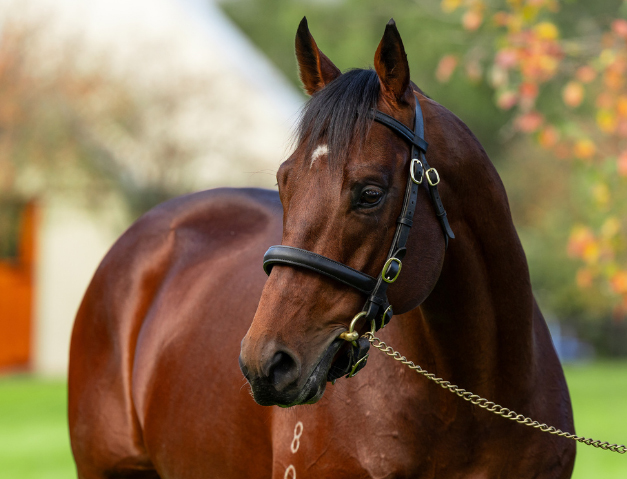
Image: Shinzo (Credit, Coolmore)
With a much larger freshman crop on the horizon, breeders and sales companies face a delicate balancing act between catalogue representation, buyer demand and commercial opportunity
August is a busy time, a crop of new foals is hitting the ground, stallion parades mark the countdown to the breeding season and amongst all of this activity, early yearling inspections for the 2027 sales quietly commence.
A larger first-season sire crop is set to reshape the 2027 yearling sales, but history suggests success will depend as much on sale placement as pedigree. Using three years of sale results, weanling trends from 2026 and projected catalogue composition, we examine where the next freshman class is most likely to land and where breeders may find their greatest opportunity.
The answer is rarely as simple as nominating the biggest sale.
Each major auction has developed its own buying bench and commercial identity. Those differences have created recognisable patterns in where certain first-season sires perform best, but the strongest results do not always follow convention.
History suggests those patterns matter.
Those trends are well established, but they also raise an intriguing question. Does following the crowd always produce the best commercial result, or can breeders create opportunity by thinking differently? If a sale is already saturated with progeny by one stallion, could another venue provide greater visibility and less direct competition? Are breeders better being a big fish in a small pool than swimming with the school? As we know scarcity drives demand. Equally, are there stallions whose commercial profile is better suited to a different buying bench than convention would suggest?
With inspections now underway, those are the decisions occupying both breeders and the bloodstock teams at Magic Millions, Karaka and Inglis. Sale placement is about more than simply securing a place in a select catalogue; it is about matching an individual yearling with the buying bench most likely to reward it. For vendors, the challenge is identifying where a horse has the greatest chance to stand out, generate competition and exceed expectations. For the sales companies, every acceptance carries financial consequences. A stronger catalogue underpins clearance rates, averages and turnover, while weaker commercial decisions can dilute competition and ultimately affect the sale’s bottom line. The challenge is not simply filling a catalogue, but curating one that gives both vendors and buyers the greatest opportunity to succeed.
The 2026 results underline that a stallion’s strongest market cannot be judged solely by where he had the most yearlings catalogued or where his highest-priced lot was sold.
Magic Millions Gold Coast continued to set a commercial benchmark, producing the top price for no less than nine of the 15 first-season sires represented across the four major sales examined, but only Anamoe and Diatonic’s progeny finished above the sale’s overall average. Several others produced strong headline prices without their wider cohorts reaching the same level, highlighting the difference between one exceptional result and broad market absorption within the sale.
Anamoe was the clear leader. He sold 31 yearlings at the Gold Coast for an average of $469,032, headed by a $1.1 million colt, before another 13 averaged more than $407,000 at Inglis Easter. His results showed both top-end appeal and depth, something few members of any freshman class are able to match.
For others, however, the strongest opportunities emerged away from the headline markets of the Gold Coast and Easter. Hitotsu sold more yearlings at Gold Coast and Inglis Classic, but produced his best result at Inglis Premier, where five yearlings averaged $154,000 and topped at $480,000. Daumier and Sejardan both achieved their highest prices at Inglis Classic, while Bruckner’s only major select-sale representation came at Premier—a result that was perhaps unsurprising given his Victorian base.
Karaka may provide one of the more interesting lessons in sales placement. Rather than a broad representation from every Australian freshman, the sale historically has a smaller group of stallions with established New Zealand support. That allows those sires to stand out, rather than compete against large drafts of paternal siblings—a strategy that may become increasingly relevant as the 2027 freshman crop expands.
After one of the smallest first-season sire representations in recent years, the 2027 yearling sales are forecast to experience a solid rebound. The increase is being driven by the much larger group of stallions that entered stud in 2024, many of which covered substantial books in their first season.
Across the four principal select yearling sales, first-season sires accounted for just 15.5 per cent of the Gold Coast catalogue, 14.9 per cent at Inglis Classic, 11.2 per cent at Inglis Premier and 10.9 per cent at Karaka Book 1. Easter was even more selective, with first-season sires making up fewer than five per cent of the catalogue.
The expected rebound is significant. Based on the size of the 2024 covering season and recent catalogue trends, first-season sires could account for roughly 28 per cent of the Magic Millions Gold Coast catalogue in 2027, around 26 per cent at Inglis Classic, approximately 22 per cent at Inglis Premier and about 20 per cent at Karaka Book 1.
In practical terms, that would equate to roughly 350 first-season yearlings at the Gold Coast, around 205 at Inglis Classic, approximately 175 at Inglis Premier and about 120 at Karaka Book 1. Australian-based stallions are likely to account for the vast majority of those numbers at the three major Australian sales, while Karaka’s freshman contingent is expected to remain largely driven by New Zealand-based first-season sires. Of course, those figures are only indicative. The final composition of each catalogue will depend on how sales companies assess the commercial appeal of individual stallions, informed by factors such as weanling sale performance, race record, service fee, marketing support, inspection quality and broader buyer sentiment.
| Sale | 2024 | 2025 | 2026 | Approx. Forecast 2027 |
| Magic Millions Gold Coast | 26.70% | 23.70% | 15.50% | 28.00% |
| Inglis Classic | 27.40% | 20.30% | 14.90% | 25.60% |
| Inglis Premier | 29.50% | 12.00% | 11.20% | 21.60% |
| Karaka Book 1 | 21.30% | 15.90% | 10.90% | 20.00% |
*Figures represent the percentage of each catalogue made up of first-season sires. Inglis Easter has been excluded because it carries only a very small freshman representation and is not directly comparable with the broader select sales.
Those projections reinforce the challenge facing both vendors and sales companies. A larger freshman crop creates more opportunities for young stallions to establish themselves commercially, but it also means more competition between paternal siblings for catalogue positions and, ultimately, buyers’ attention.
The forecasts also suggest the pressure will not be spread evenly. Shinzo and Ozzmosis are expected to dominate the freshman ranks, with both likely to have substantial drafts at Magic Millions Gold Coast and Inglis Classic. King’s Gambit and Hawaii Five Oh also look set to have strong representation across the two eastern states sales, while Cylinder’s Victorian base is expected to make Inglis Premier his strongest platform despite a smaller overall first crop.
Further down the rankings, stallions such as Panthalassa, Benbatl, King Colorado and Lofty Strike could find Premier offers the most natural fit, while Queensland-based sires Don Corleone, Officiating, Red Resistance and Alpine Edge are forecast to have a greater proportion of their select-sale representation at the Gold Coast than elsewhere for obvious reasons.
For breeders, those forecasts highlight an important consideration. The stallions expected to have the greatest catalogue representation will also generate the greatest competition between paternal siblings. Strong representation is often a positive commercial signal, but it can also make it harder for an individual yearling to stand out. In some cases, for the right individuals a more modest presence at the right sale may offer a better opportunity to attract buyer attention. As inspections continue, matching the right yearling to the right marketplace may prove just as important as choosing the right stallion.
Ultimately, inspections are not simply about deciding whether a yearling is good enough for a select sale. They are about deciding which sale offers the greatest commercial opportunity and if those sales can absorb the quantity. As the freshman ranks swell again in 2027, the difference between an average result and an outstanding may come down as much to placement as pedigree or type.