

Australian Connections to the European Stallion Ranks
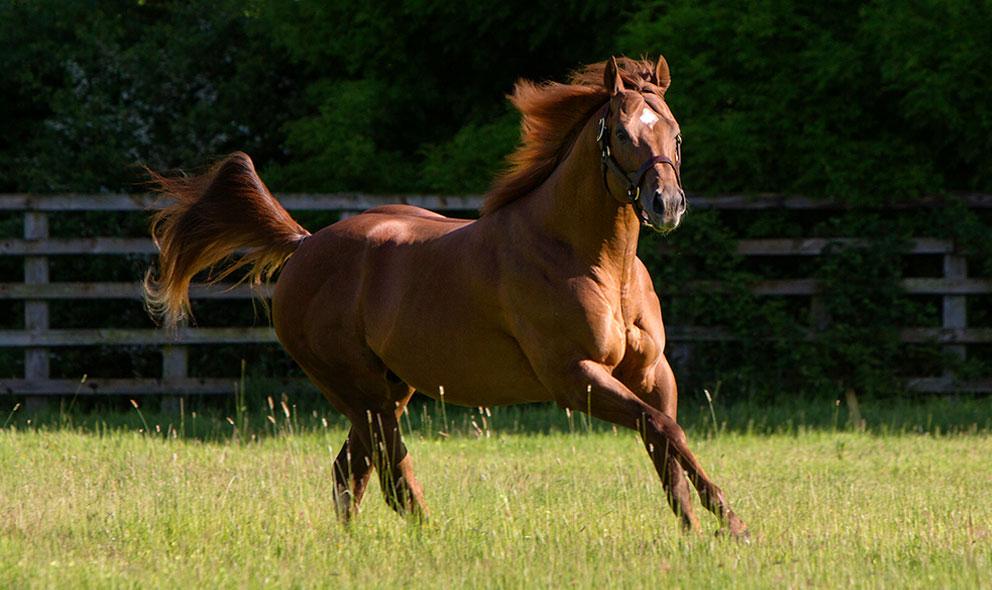
Image: Night of Thunder (Credit: Darley)
Look through Europe’s leading stallion ranks and, from an Australian perspective, there is considerably more familiarity than might first appear.
The names may belong to the European stallion landscape, but many of the bloodlines certainly don’t feel foreign to Australian breeders.
Dubawi (Dubai Millennium), Shamardal (Giant’s Causeway), Iffraaj (Zafonic), Galileo (Sadler’s Wells), High Chaparral (Sadler’s Wells) and Scat Daddy (Johannesburg), along with our own Choisir (Danehill Dancer), are all represented through stallions prominent in the European ranks, with their bloodlines having established important connections to Australia and New Zealand.
Rather than simply telling us which stallions are succeeding in Britain, Ireland and Europe, the rankings provide another way of looking at bloodlines Australian and New Zealand breeders have been trying to access for years.
Some were identified early and succeeded here. Others came and went before their full value was apparent. Some have returned through sons, while others are now being pursued through the next available branch of the sire line.
That connection is perhaps most obvious through Dubawi.
His sons are increasingly important internationally and Australia has been attempting to tap into that influence through horses including Too Darn Hot (Dubawi) and Ghaiyyath (Dubawi).
Then there is Shamardal.
His influence has reached Australasia directly and indirectly through horses including Lope de Vega, Blue Point and Pinatubo, while Lope de Vega’s son Lucky Vega now stands at Yulong and his WA-based son Gingerbread Man stands at Yarradale.
Iffraaj provides another connection. He himself shuttled to New Zealand, while his outstanding son Wootton Bassett later shuttled to Australia.
High Chaparral is an even more established example. His Australian legacy can now be seen through significant sires including So You Think, Dundeel, Ace High and Toronado.
The Scat Daddy line provides another fascinating comparison. No Nay Never spent four seasons covering substantial books in Australia and produced a 63.7 per cent winners-to-runners ratio, including Group 1 winner Madame Pommery, while Justify subsequently demonstrated just how potent that sire line could be in this hemisphere, with a 64.3 per cent winners-to-runners ratio and a strong list of stakes winners that includes Group 1 heroine Spicy Martini.
The pattern shows how consistently the many Australian and New Zealand stallion farms have looked towards the leading international sire lines for blood that might work here. Coolmore, Godolphin, Arrowfield, Swettenham, Woodside Park and leading New Zealand studs such as Cambridge Stud and Windsor Park have repeatedly gone back to these families, trying different sons and different branches of sire lines whose performance suggests they have something worth pursuing.
There is also traffic in the opposite direction, although not much.
Starspangledbanner (Choisir), the Australian-bred son of Choisir (Danehill Dancer), continues to make his mark on the European stallion ranks, highlighted this season by Precise, winner of the Coronation Stakes (Gr.1, 1m), and Gstaad, winner of the Irish 2,000 Guineas (Gr.1, 1m). His success is an important reminder that the connection between the two breeding industries is not simply a story of Australia searching Europe for stallions. Australian speed has also travelled north and left its mark on the European stallion ranks.
Identifying the right bloodline is one thing. Giving it enough opportunity to establish itself is another.
Dark Angel (Acclamation) is an interesting example. He was already well into his stud career in Europe before a son was sent south specifically to test the line in the Australian market. Harry Angel (Dark Angel) has since demonstrated its compatibility with the Australian racing environment, and another opportunity arrives in 2026 through Charyn at Cambridge Stud.
The shuttle system has given Australian and New Zealand breeders extraordinary access to stallions that otherwise would have been beyond the reach of the vast majority, often providing access to elite international performers at a considerably lower price point than many of our own retiring first-season stallions.
But it has also compressed the period in which those stallions are expected to prove themselves commercially. Breeders may gain access to world-class bloodlines, but the market can begin passing judgement before their first Australian-bred progeny have had the opportunity to fully establish themselves on the racetrack.
A stallion can cover several Southern Hemisphere books before his first runners have provided meaningful evidence. His first European runners may have appeared, but commercially that evidence can be largely immaterial to the Australian yearling market. Breeders, stallion farms and buyers are therefore making decisions with incomplete information and the market can make those decisions particularly unforgiving.
Ghaiyyath (Dubawi) is a timely example.
The son of Dubawi covered 103 mares in his first Australian season in 2021, followed by 98 in 2022, 97 in 2023 and 79 in 2024. With support gradually declining, he did not return to Australia for the 2025 season.
Yet while his commercial momentum was heading in one direction, his runners were beginning to take him in another.
Ghaiyyath currently sits prominently among Australia’s leading sires by stakes wins, with five stakes winners and eight stakes victories from 58 runners in the 2025-26 season. That performance has helped spur his return to Australia for 2026, when he is advertised at $88,000.
A stallion who left Australia following a season at $27,500 returns at more than three times that fee after his progeny demonstrated their ability on the racetrack.
It doesn’t necessarily mean breeders were wrong to move away from him. They operate in a commercial environment and have to respond to what buyers are prepared to purchase. But it does expose one of the tensions within the shuttle system: what the yearling market wants from a stallion at one point in time and what that stallion ultimately delivers on the racetrack are not always the same thing.
Night Of Thunder (Dubawi) is perhaps the most striking example when Australia’s former shuttle stallions are compared with the current European sire rankings.
He stood just one season in Australia, covering 96 mares in 2016 at $16,500, before returning to Ireland. He arrived early in his stud career, well before the scale of what he would become in Europe was apparent.
What he left behind was remarkably effective.
Night Of Thunder has had 73 runners for 59 winners in Australia, a truly phenomenal 80.8 per cent winners-to-runners rate, producing nine stakes winners, including four Group winners, and more than A$13 million in earnings. His Australian-bred performers include Queensland Derby winner Kukeracha, Cherry Tortoni, Rumbled Again, A Beautiful Night and Rockribbed.
Our research uncovered 15 individual Night Of Thunder yearlings across the Australian and New Zealand sales from his 2016 season. They averaged approximately $47,700 with a top price of $130,000. There was little in those figures to suggest Australian breeders had briefly possessed access to a stallion who would eventually become one of Europe’s elite sires.
Night Of Thunder leads the 2026 European sire standings by prizemoney and sits second by black-type winners. He now stands at a 2026 fee of €200,000.
His unbeaten three-year-old son Bow Echo (Night Of Thunder) has emerged as one of Europe’s defining horses of 2026, completing a remarkable Group 1 sequence through the 2000 Guineas, St James’s Palace Stakes and Sussex Stakes.
Australia had direct access to Night Of Thunder before his true value as a stallion was apparent; by the time the evidence arrived, he was gone.
Invincible Spirit (Green Desert) shuttled to Chatswood Stud in Victoria before his rising Northern Hemisphere reputation made him increasingly valuable and ultimately brought his Australian shuttle career to an end. Among the Australian horses conceived during that period was I Am Invincible (Invincible Spirit), whose extraordinary importance to Australian breeding was still years from becoming apparent.
No Nay Never provides another variation. The son of Scat Daddy covered four substantial Australian books; 101 mares in 2016, 109 in 2017, 98 in 2018 and 83 in 2019. while his fee climbed from $11,000 to $44,000 over the same period.
There was evidence his progeny could work in this part of the world, too, although the results differed markedly on either side of the Tasman. In Australia, No Nay Never has produced three black-type winners from 152 runners, headed by Thousand Guineas (Gr.1, 1600m) winner Madame Pommery. In New Zealand, his Southern Hemisphere-bred progeny produced 16 winners from just 22 runners, including four stakes winners and two Group winners.
No Nay Never ceased shuttling after 2019 and has since developed into one of Europe’s significant sources of speed. This season alone he has produced 1000 Guineas (Gr.1, 1m) winner True Love and King Charles III Stakes (Gr.1, 5f) winner Mission Central, alongside Coventry Stakes (Gr.2, 6f) winner Great Barrier Reef and Albany Stakes (Gr.3, 6f) winner Libertango at Royal Ascot.
Unlike Night Of Thunder, Australian breeders gave No Nay Never meaningful opportunities across four seasons. His emergence as one of Europe’s most important sources of speed simply came later.
There are examples in the other direction as well.
Perugino (Danzig) was brought back to Australia after the emergence of Testa Rossa (Perugino), but his return did not produce another horse of comparable influence. A second opportunity doesn’t necessarily guarantee the same result.
That makes Ghaiyyath’s return particularly interesting. Australia is receiving something it has not always had with these stallions: a second chance. But will the market be forgiving of the season away, or will the gap test just how short commercial memory can be?
Maurice (Screen Hero) offers an imperfect but useful recent comparison. A break in his shuttle pattern interrupted the flow of Australian-bred progeny at a point when, commercially, every runner counts. Each crop provides another opportunity for winners and stakes horses to reinforce a stallion’s reputation in the sales ring, and a missing season means fewer of those reminders. Maurice’s subsequent recovery suggests that momentum can be rebuilt, but it also illustrates what is at stake when that continuity is broken.
The incoming group is not short on credentials. Delacroix won the Eclipse S. (Gr.1, 1m2f); Charyn swept the Queen Anne S. (Gr.1, 1m), Prix Jacques le Marois (Gr.1, 1600m) and Queen Elizabeth II S. (Gr.1, 1m); Laurel River won the Dubai World Cup (Gr.1, 2000m) by eight lengths; Diego Velazquez won the Prix Jacques le Marois (Gr.1, 1600m); and Lead Artist took the Lockinge S. (Gr.1, 1m).
There are some familiar names sitting behind them.
Two sons of Dubawi, a son of Wootton Bassett, and representatives of Dark Angel, Into Mischief and Frankel will be available to breeders in this part of the world. They arrive at a time when many of those same bloodlines are prominent in the European stallion ranks that prompted this discussion in the first place.
Nobody can suggest one of them will become the next Night Of Thunder, Lope de Vega or No Nay Never. Stallion selection has never been that simple, and the Perugino example is a useful reminder that hindsight can make the process appear much easier than it really is.
But history does provide a warning about judging them too quickly.
Breeders have to produce a horse the market wants, stallion farms have to fill books for their next generation and buyers inevitably move towards what is fashionable. Those commercial realities are genuine.
So too is the evidence sitting in the European sire tables: Australia has already encountered many of these bloodlines and, in some cases, had only brief access to the stallion before understanding what it had.
In 2026 another group have just arrived on the scene.
Not all will necessarily succeed, and history tells us there is no simple way of knowing which will. The more interesting question is whether Australia will still have access to the ones that do.