
Four sales, one remarkable nursery: Lindsay Park history repeats at Cornerstone
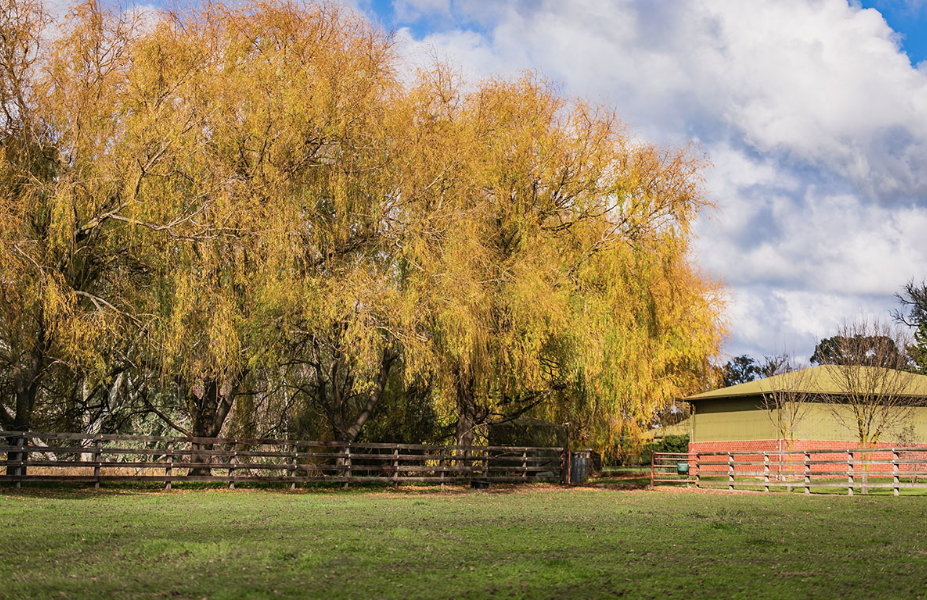
Image: Cornerstone Stud (Credit: Cornerstone Stud)
From an extraordinary two at a time auction devised by Robert Sangster, to a 180 lot sale staged on the lawn at Lindsay Park and a record-setting dispersal a decade later, bloodstock leaving the famous Angaston nursery has repeatedly rewarded those prepared to buy it.
Now, more than 40 years after the first of those sales, Cornerstone Stud is writing the latest chapter online.
It could be the last, but it is certainly not the first time a unique dispersal has been associated with the famed Cornerstone Stud property at Angaston.
Long before it carried the Cornerstone name, the property was Lindsay Park, Colin Hayes’ sprawling South Australian training and breeding base and, over the decades, one of the finest nurseries of thoroughbreds in Australia.
Hayes acquired Lindsay Park in 1965 and developed it into an internationally renowned racing and breeding operation, standing stallions including Without Fear (Baldric), Zabeel (Sir Tristram), At Talaq (Roberto), Jeune (Kalaglow) and Rory’s Jester (Crown Jester), while a remarkable succession of elite racehorses emerged from the wider Lindsay Park operation.
Now its latest custodians are dispersing Cornerstone’s commercial bloodstock portfolio, with 34 lots being offered through the Inglis Digital August (Early) Sale ending on Wednesday. The draft includes broodmares, young stock and breeding interests, with mares in foal to stallions including Chaldean (Frankel), Celestial Legend (Dundeel), Starlust (Zoustar) and Storm Boy (Justify).
The digital setting is vastly different to the Lindsay Park dispersals that came before it. There will be no temporary sales ring erected beneath the trees at Angaston and no packed ABCOS (Australian Breeders Co-operative Society) auditorium of international buyers.
Instead, nine years after Inglis launched its Digital platform in May 2017, buyers can participate from virtually anywhere in the world.
But Cornerstone general manager Sam Pritchard-Gordon believes history gives them good reason to pay attention.
“There’s been Lindsay Park dispersals before and they’ve always thrown up good horses and dams of exceptional horses,” Pritchard-Gordon told ANZ Bloodstock News.
“Those sales were much bigger affairs than what was going on here, but there’s an opportunity here for someone as the small collection represents a fair few years of hard work, there’s nice bloodstock amongst them.”
Among the current offering is Jest Excel (Exceed And Excel), dam of last season’s Gimcrack Stakes (Gr 3, 1000m) winner Shiki (Too Darn Hot), while Inglis is offering the Cornerstone owned bloodstock unreserved, aside from shares in stallions Nicconi (Bianconi), Fierce Impact (Deep Impact) and Rebel Dane (California Dane).
If history is any guide, the obvious horses are not necessarily the only ones worth following.
The first of the remarkable sales associated with the Lindsay Park Swettenham era came in 1984, when Robert Sangster’s Swettenham Stud held a special reduction sale in Adelaide through the ABCOS operation.
Sangster and Hayes had become major partners in Australian racing and breeding and, in typical Sangster fashion, the sale was conducted according to a concept that would be almost unimaginable today.
Rather than offering the yearlings individually, they were paired and sent into the ring two at a time.
Former ABCOS manager Adrian Hancock recalled the logic was to ensure nobody could accuse Sangster of quietly retaining the better horses.
“To avoid anyone accusing him of keeping the best, they paired everything up and they went through the ring together. Lot 1, A and B,” Hancock told ANZ Bloodstock News.
“Everyone knew which was which and away they went, and when the hammer fell they’d approach the buyer and ask which one of the pair he wanted.
“If the buyer said he only wanted A, Sangster kept B. That’s the way to have a reduction sale!”
It was no low-key exercise.
Duncan Grimley, who worked at ABCOS at the time, remembers an international crowd being assembled for the occasion.
“We had a black tie night at ABCOS, we flew in several internationals like David Nagle from Barronstown Stud and it was a great night,” Grimley said.
“Every man and his dog was there. Patrick Hogan was over, and he picked the Sticks And Stones yearling out of Eight Carat over the Maybe Mahal lot, and we all shook our heads about it.
“Anyway, he picked the Group 1 winner and the other was a maiden.”
That Sticks And Stones (Faringdon) filly became Diamond Lover.
Later a Group 1 winner herself, Diamond Lover became an exceptional broodmare at Cambridge Stud. Her progeny included Australian Derby (Gr 1, 2400m) winner Don Eduardo (Zabeel) and dual Group 1 winner Tristalove (Sir Tristram), while her influence extended considerably further through subsequent generations.
In hindsight, it was an extraordinary demonstration of the quality these unusual Lindsay Park/Swettenham sales could release into the wider breeding population.
Eight years later came an entirely different affair.
By 1992 Colin Hayes was withdrawing from commercial breeding and the Colin Hayes Classic Collection Sale, held at Lindsay Park on May 17, represented a sale of extraordinary scale and completeness.
Contemporary reporting described an invitation-only catalogue of 180 lots, including Hayes’ broodmare band as well as weanlings, yearlings, two-year-olds and racing fillies and mares.
This time the buyers came to Lindsay Park itself and it was unusual as it was held in conjunction with both the large auction houses.
“ABCOS did it in conjunction with Inglis,” Grimley told ANZ Bloodstock News. “David Coles was the auctioneer with Reg Inglis.
“We built a sale ring and a rostrum on the lawn in front of the house.”
Even transporting the buyers had an international sale feel.
“It was just after a sale on the Gold Coast from memory and we had a plane fly buyers down, like they do from Newmarket to Deauville, but it was Gold Coast to Adelaide for a few days,” Grimley said.
“The mares were in paddocks and the colts in the stables. There were 180-odd lots. It was a massive sale.”
It also serves as a reminder of South Australia’s bloodstock standing at the time.
“The thing with Adelaide was, at that time, and people forget this, it was the second best sale in Australia behind Easter,” Grimley said.
One mare to leave Lindsay Park that day would have an influence far beyond anything her race record suggested.
Military Belle, an unraced daughter of Lindsay Park’s breed shaping stallion Without Fear, was bought by Ron and Helen Ashdown.
Helen Ashdown later recalled that the couple had gone to Hayes’ on property mare sale specifically searching for mares suited to their stallion Nediym (Shareef Dancer). They bought Military Belle and sent her to Nediym in 1992 before repeating the mating the following season.
The second mating produced General Nediym, subsequently winner of the Newmarket Handicap (Gr 1, 1200m), Lightning Stakes (Gr 1, 1000m) and Magic Millions 2YO Classic (1200m), before establishing himself as a successful sire.
Once again, the true value of a Lindsay Park dispersal lot was only revealed after it left the farm.
Another decade passed before Lindsay Park staged its 2002 Classic Collection dispersal at Angaston.
By then the South Australian auction landscape had changed. Magic Millions had purchased ABCOS in 1999 and began conducting its Adelaide sale at Morphettville the following year.
The headline mare at Lindsay Park was Biscay Bird (Bluebird), already a valuable commodity as the dam of Australian Derby winner and champion three year old Universal Prince (Scenic) and a half-sister to multiple Group 1 winner Blevic (Scenic).
Offered in foal to Danehill (Danzig), Biscay Bird realised $825,000 to Strawberry Hill Stud, reported at the time as the highest price paid for a thoroughbred in South Australia.
Lot 129, Visual Displays (Scenic), believed to be in foal to Agnes World (Danzig), was next highest at $340,000.
Yet perhaps the horse that best supports the case for searching all the way through a Lindsay Park dispersal came nowhere near the top of the market.
South Australian breeders Alistair and Patricia McFarlane paid just $9,000 for the small stakes-winning mare Gift Bouquet (King’s High).
She later produced Adelaide Guineas (Gr 3, 1600m) winner Blahnik (Jeune), stakes winner Elysees (Statue Of Liberty) and, as her final foal, The Inevitable (Dundeel).
The Inevitable would become a multiple stakes winner and millionaire, his victories including the CS Hayes Stakes (Gr 3, 1400m), an almost impossibly neat connection back to the farm from which his dam had been found for $9,000.
Diamond Lover. Military Belle. Biscay Bird. Gift Bouquet.
Different prices, different pedigrees and different eras, but each offers a reason to look beyond the circumstances that caused the bloodstock to be sold.
The present dispersal comes as the Cornerstone operation contracts following its decision to leave the stallion business.
Pritchard-Gordon said the loss of stallion-related agistment had fundamentally altered the economics of the farm.
“The moment we decided that we weren’t going to stand stallions, the business was going to contract,” he said.
“The decision to stop standing stallions, because there wasn’t a supporting breeding network in South Australia meant that our agistment revenue dropped by half in the last couple of years.”
He paid tribute to co-owner John Frankhuisen for supporting the operation through that transition and recent years, but acknowledged Frankhuisen’s enthusiasm for continuing at the same level had waned despite his love of the property.
What happens to the famous land from here remains less certain.
“John’s been fantastic and he and I will need to work through that,” Pritchard-Gordon said.
“I don’t think it’ll be a stud farm of any size or significance in the immediate future, but there is no doubt it is incredible land for growing out horses.
“And, you know, there may be an opportunity for someone.”
Hancock believes whatever happens next represents the close of something significant.
“The property has such a remarkable history, just remarkable,” he said.
“It’s the end of an absolute era.”
Perhaps.
But four decades of sale ring history also provide another way to view this latest dispersal.
Each of the previous sales was unusual for its time: Sangster sending horses through in pairs in 1984; the industry descending on a purpose-built ring on the Lindsay Park lawn in 1992; and the Magic Millions conducted Classic Collection dispersal in 2002.
In 2026, the horses do not even have to leave their paddocks to enter the sale ring.
The method has changed again.
The nursery has not.
And for prospective buyers inspecting the latest horses to come out of the Cornerstone/Lindsay Park property, that history may be the most compelling reason of all to look very closely.